
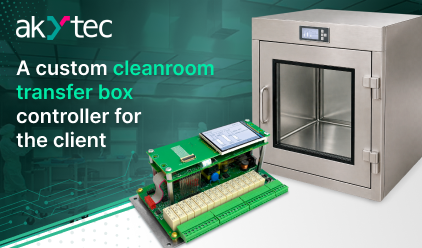
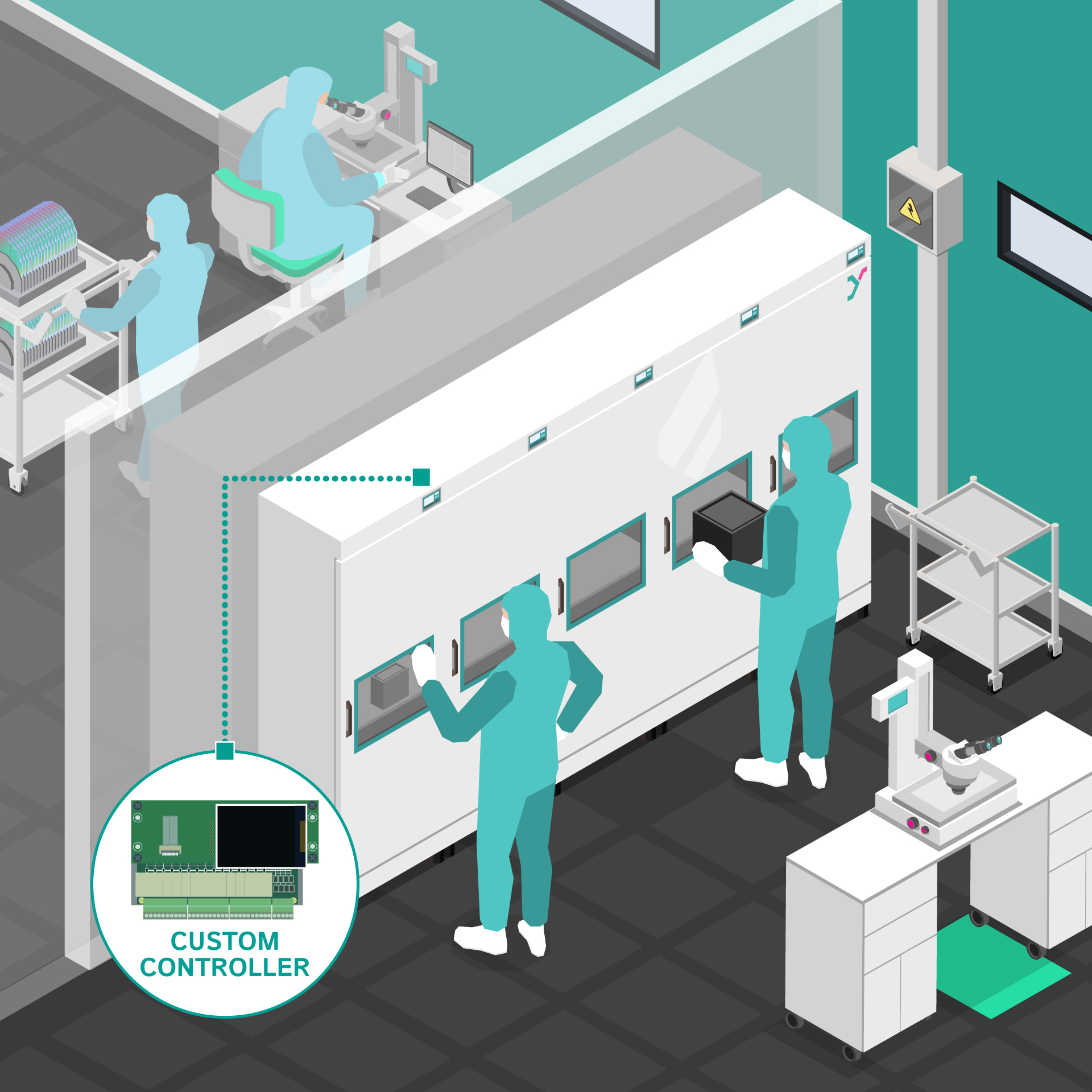
A manufacturer of cleanroom equipment needed a compact and cost-efficient control system for a new generation of transfer boxes with integrated monitoring, signaling, and semi-automatic operation modes. The solution had to fit into a very limited internal space while remaining reliable and easy to scale for small-series production.
Challenge
The client initially considered developing a custom control board from scratch. However, this approach required significant investment, long development cycles (up to 1–2 years), and involved technical and financial risks. At the same time, existing off-the-shelf solutions did not fully meet the specific requirements of the application.
Solution
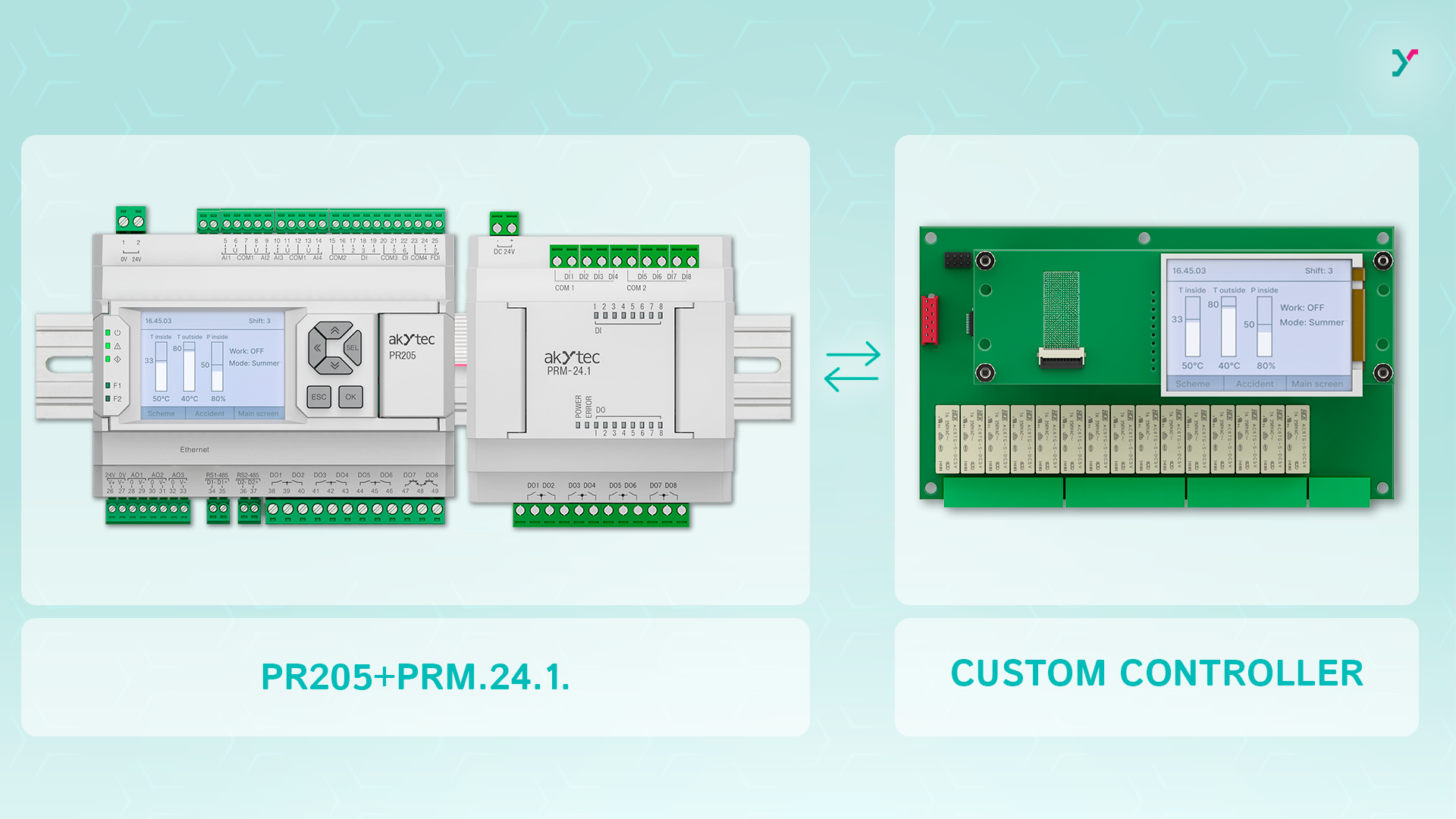
Instead of starting from zero, the system was implemented using a proven hardware base built around the akYtec PR205 programmable relay and expansion modules.
The approach focused on:
- Using standard, reliable components as a foundation
- Adapting the system architecture to match the exact application needs
- Developing custom logic and interface elements without modifying the core firmware
All system elements were integrated into a single mounted assembly, including:
- Control of lighting, UV lamp, and ventilation
- Monitoring of pressure differential and access states
- Management of electromagnetic locks and signaling devices
- User interaction via display and membrane keypad
Implementation
The project was delivered through a lean development model:
- Hardware design and integration outsourced to a specialized contractor
- Software logic developed specifically for the application
- No changes to the underlying system platform required
This allowed the team to move quickly from concept to a working prototype and prepare for production within a short timeframe.
Results
The implemented solution achieved the following:
- Time to market reduced to under 6 months
- No need for full custom hardware development
- Minimal upfront investment
- Stable and predictable system behavior based on proven components
- Simplified production and assembly for small batches
The final product is delivered as a ready-to-install control unit, eliminating the need for the client to assemble and configure multiple devices independently.
Business impact
The project demonstrates a practical way to launch specialized automation products without long development cycles.
Instead of committing to high-risk custom electronics from the beginning, the client validated the concept using existing platforms and quickly entered the market.
This approach enables:
- Faster decision-making
- Lower financial exposure
- Easier transition to further optimization or hardware integration in future iterations
The system is expected to reach stable demand within a niche market segment, with scalable production aligned to real customer needs rather than assumptions.

