
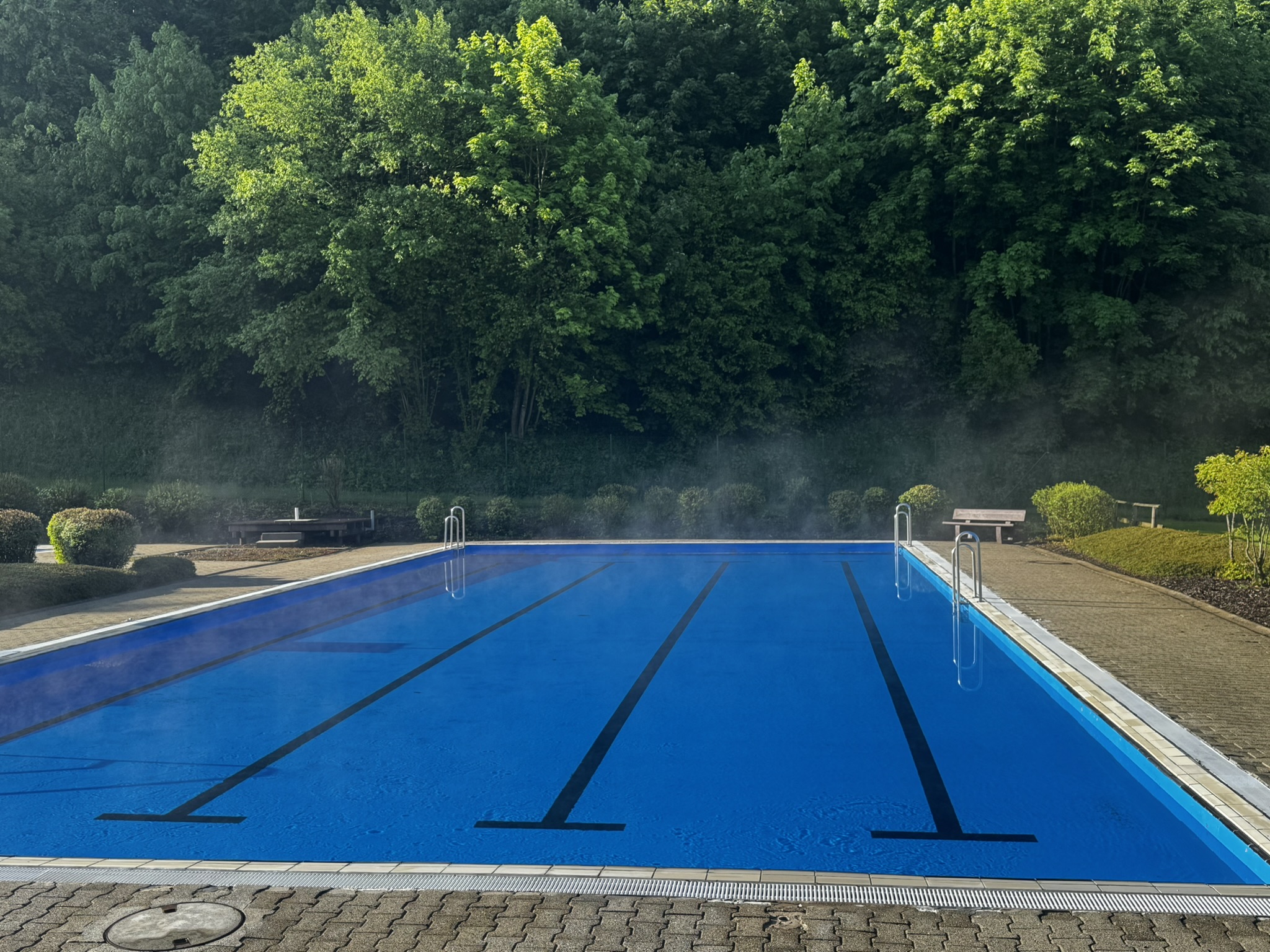
Lauterstein outdoor swimming pool
At Lauterstein outdoor swimming pool, EnergyCore and akYtec demonstrate how heat pumps, photovoltaic generation, storage and established heating technology can be brought together into an intelligently managed system.
Bringing individual components together into a working system
Which source is supplying heat right now? When is enough solar power available? How can grid imports be kept below 40 kW while ensuring a reliable supply to the pools and the domestic hot water station? At Lauterstein outdoor swimming pool, one system answers these questions: NetPV EnergyCore.
The heat supply system has been extensively modernised. Two Hoval heat pumps with a total of four heat-generating units provide approximately 100–120 kW of combined thermal output. The installation also includes two cascaded buffer tanks of around 1,750 litres each and a photovoltaic installation of approximately 100 kWp. The existing 100 kW pellet boiler remains part of the system as an additional and backup heat source.
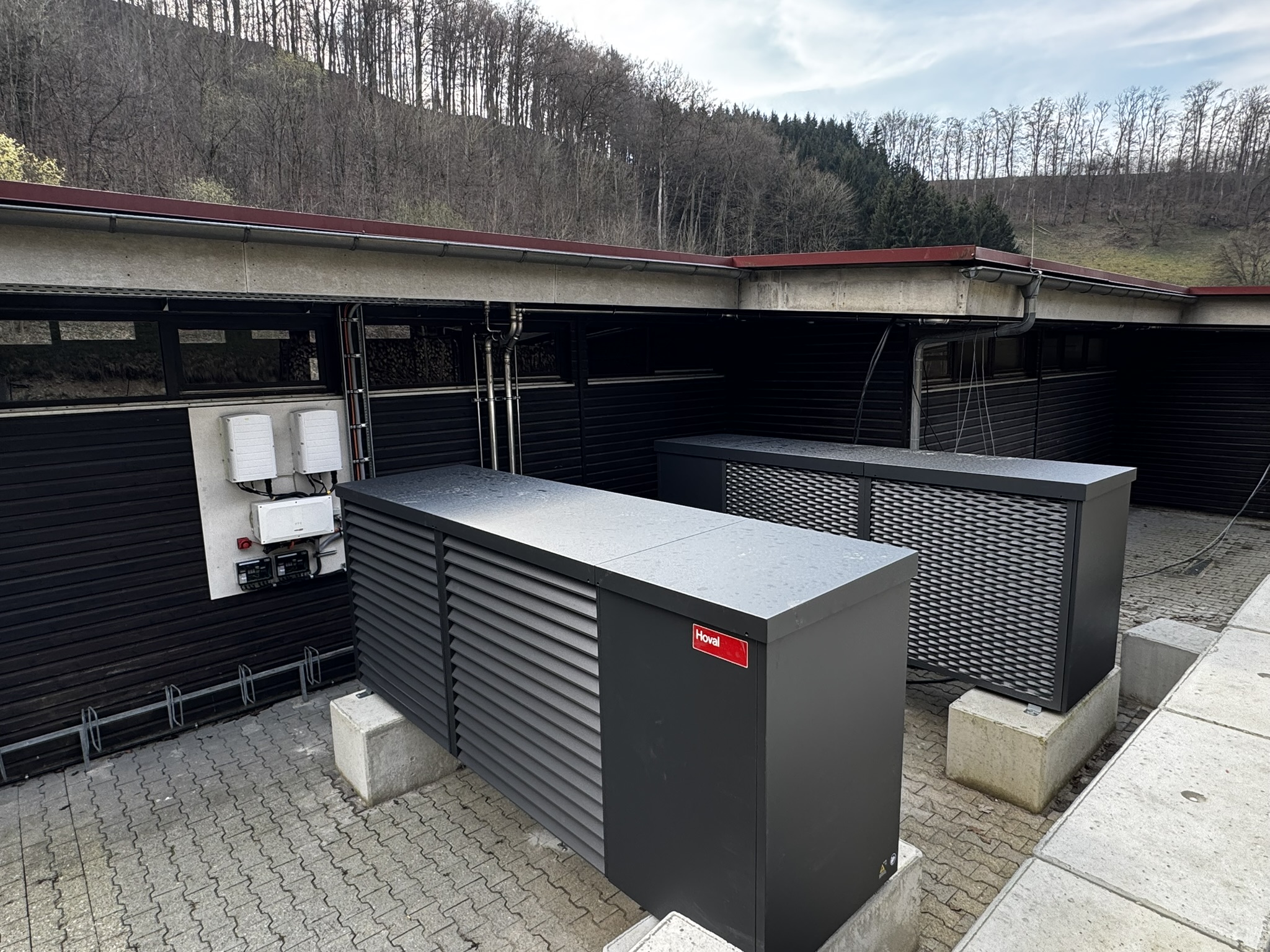
Heat pumps integrated into the energy management system
What may initially look like a collection of separate installations now works as one system. EnergyCore is the central coordinating element of the installed energy equipment. Each component retains its own built-in intelligence, while the system orchestrator ensures that the components work together at the right time.
Managing heat intelligently as well as electricity
The challenge starts with electricity: the grid operator has limited imports from the public grid to 40 kW. EnergyCore therefore coordinates the electrical power demand of the heat pumps with available PV generation and the other operating requirements.
But that is only half the task. EnergyCore also manages the thermal output of the heat pumps. The platform coordinates heating demand, supply temperatures, buffer charging, pumps and control valves. The existing pellet boiler can provide automatic support when additional heat is needed.
Thermal stratification in the buffer tanks requires particular attention. A suitably hot layer must remain available for the connected domestic hot water station. EnergyCore controls buffer charging to preserve this stratification while supplying the swimming pools with heat according to demand.
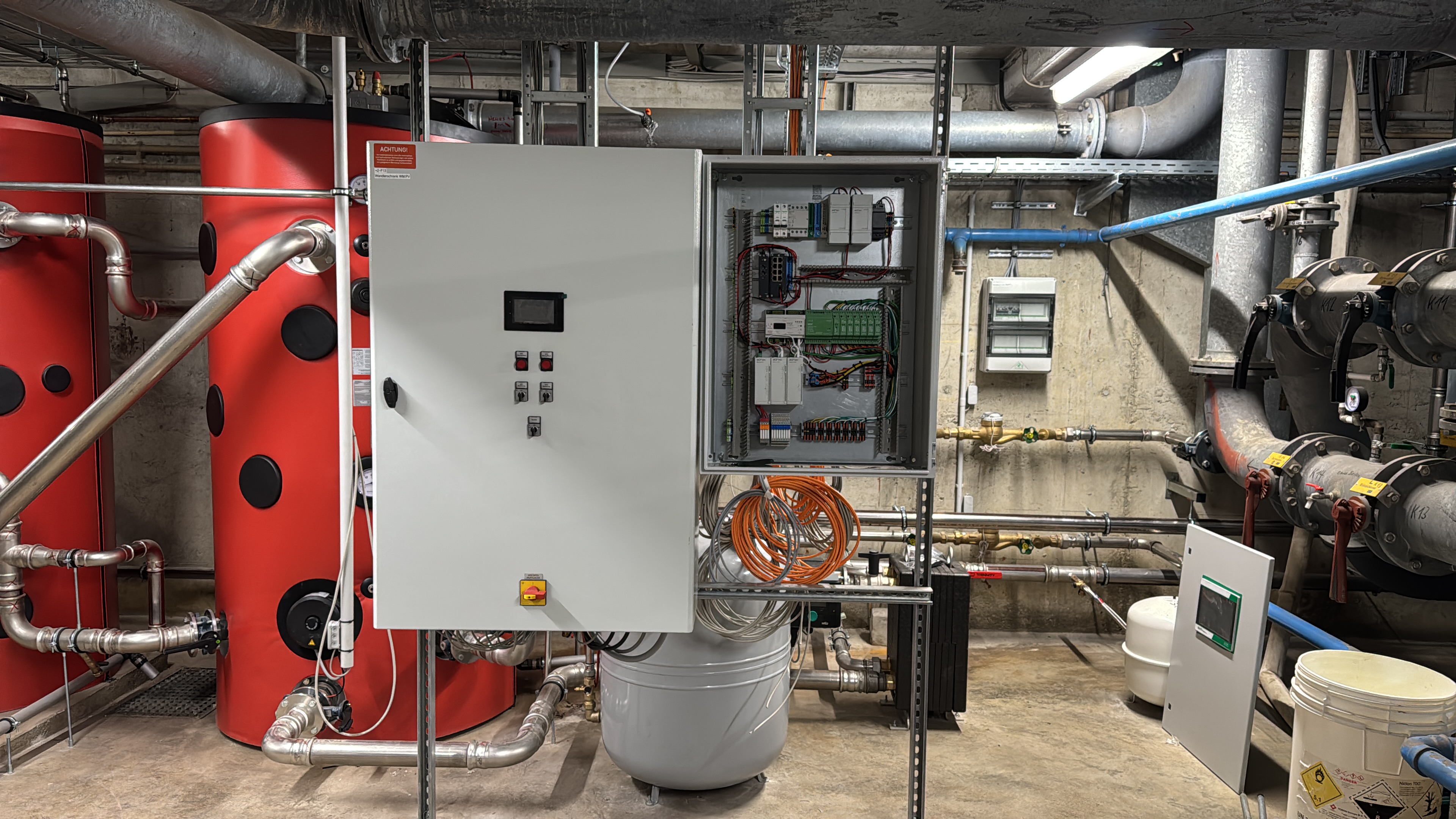
Technical room with buffer tanks and control cabinet
To do this, the system continuously evaluates electrical and thermal power, temperatures, flow rates, storage conditions and operating feedback. Different day and night operating modes reflect actual pool operation. The focus is on optimising how the devices work together.
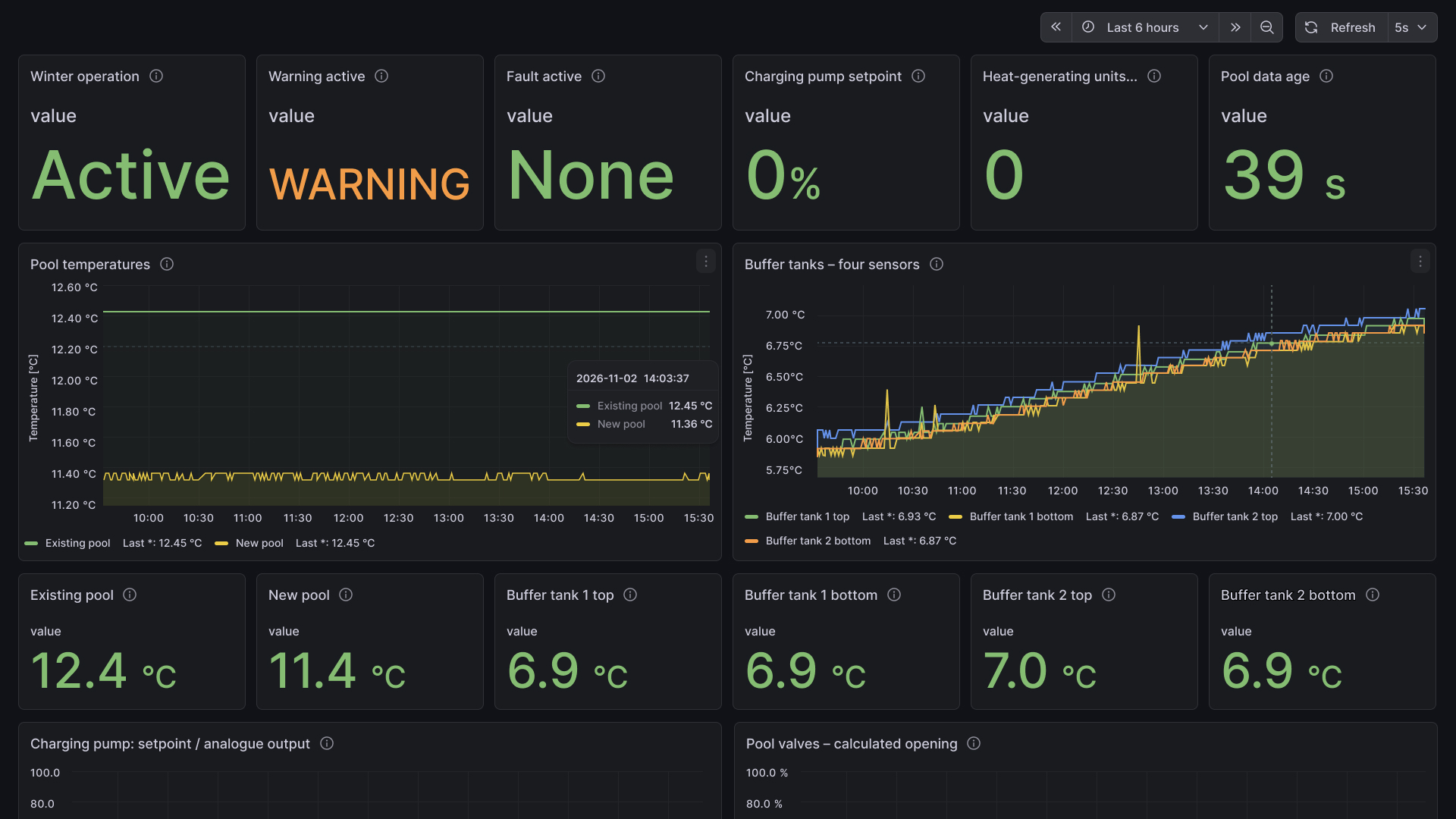
NetPV EnergyCore supervisory dashboard showing operating status, pool temperatures and buffer tank temperature trends during winter operation
EnergyCore as an industrial product beyond a single installation
EnergyCore is an independent industrial energy management system and plant orchestrator developed by NetPV. This versatile platform combines local measurement, control and regulation with higher-level management of electrical and thermal energy flows.
Its most important requirement is deliberately straightforward: the local installation must operate reliably even without an internet connection. EnergyCore makes the decisions needed for ongoing operation directly on site. Loss of the cloud connection does not affect the basic functionality of the local controller.
akYtec provides the industrial foundation for an advanced system
Local automation is based on an akYtec SPC210-10 with an integrated 10.2-inch touchscreen and CODESYS 3.5. MK210-311, MV210-101 and MU210-502 Ethernet I/O modules connect digital signals, analogue measurements and control outputs. Modbus TCP connects equipment including the heat pumps and a Siemens PAC2200, while an ESERA ECO 608 PRO integrates the 1-Wire temperature sensors.
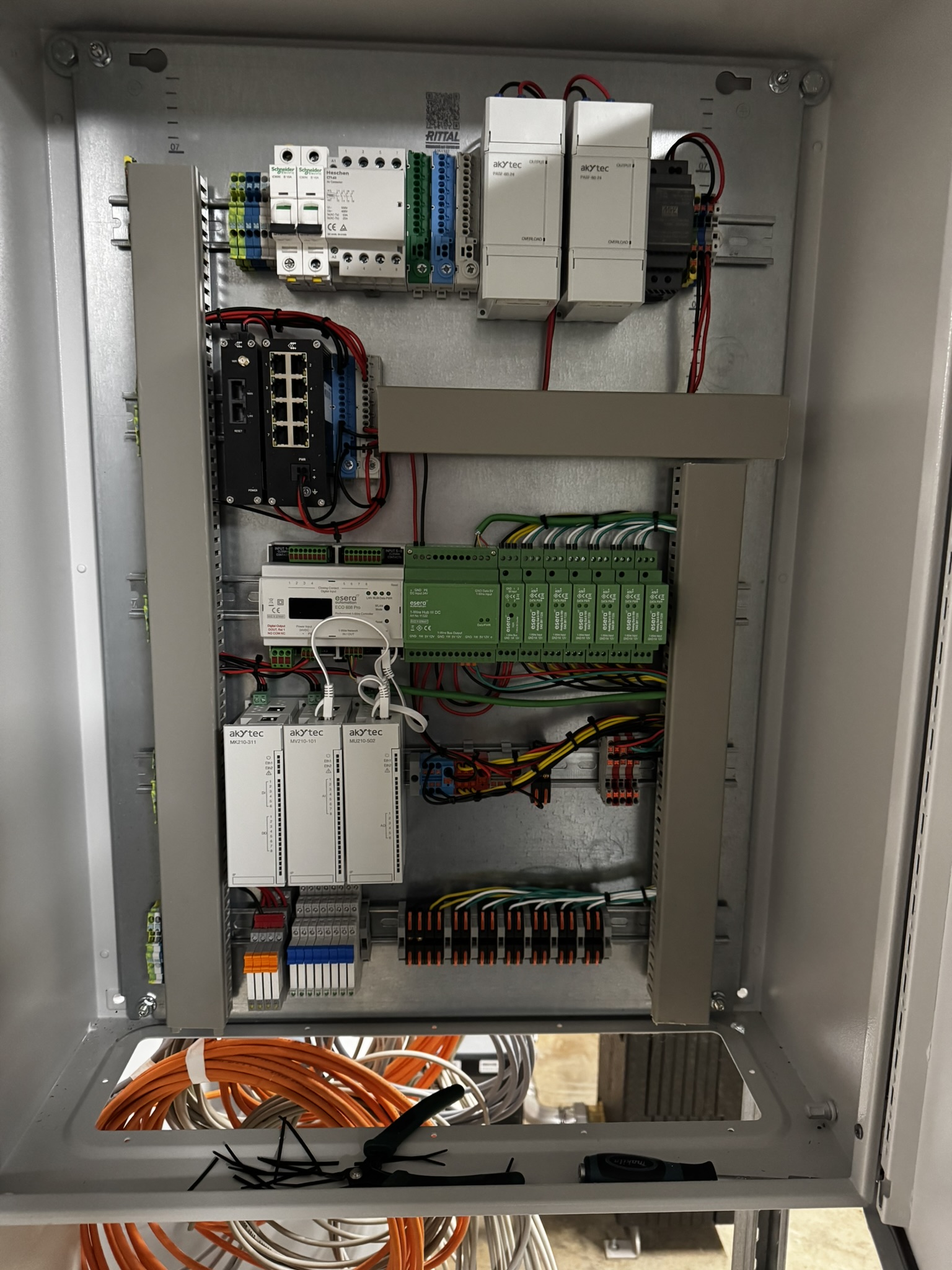
Control cabinet with the installed automation equipment
The 24 V supply is also designed for operational reliability. Two akYtec PASF-60.24 power supplies are adjusted to match and connected in parallel as a redundant supply. With the control system consuming approximately 40 W, the rated output of a single 60 W power supply is sufficient to supply the load.
For NetPV, akYtec offers more than a comprehensive, cost-effective hardware portfolio. The openness of CODESYS, flexible I/O integration, knowledgeable technical support and akYtec Cloud suit an energy management system designed to grow as its tasks expand.
Three levels within one integrated system
- Autonomous control. At the pool, EnergyCore coordinates heat generators, thermal output, pumps, valves and buffer stratification. The local controller independently maintains stable plant operation.
- Central understanding. akYtec Cloud transfers telemetry and operating data to the central NetPV supervisory computer, which is located at NetPV and operated, monitored and administered there. Other customer installations supported by NetPV also provide their data through the same infrastructure.
- Feeding insights back. Telemetry can optionally be enriched with additional information such as weather forecasts and electricity prices. The data can then be processed centrally to produce PV generation and load forecasts, suitable operating and charging periods, or improved control parameters. These results can be returned to the local controllers through akYtec Cloud and taken into account within the operating and protection limits of each installation.
Local autonomy is preserved, while connectivity extends the system’s capabilities.
A supervisory centre at NetPV for multiple installations over many years
The central NetPV supervisory computer is designed as a shared technical platform for the customer installations it supports. It receives telemetry through akYtec Cloud, stores measurement and operating data over the long term, displays relationships in the supervisory interface and supports the creation of informative reports.
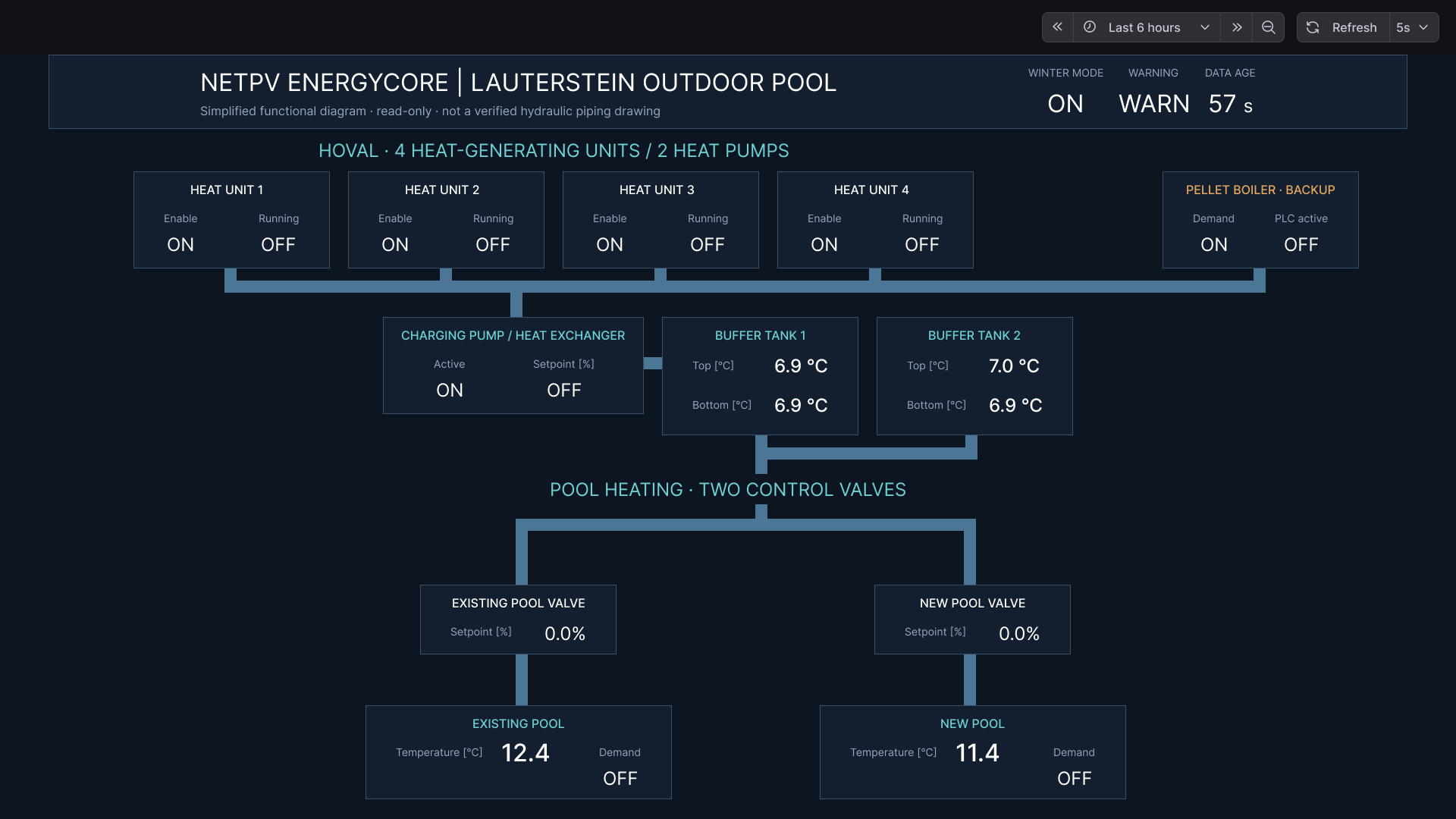
Simplified functional overview in NetPV EnergyCore showing heat generators, buffer tanks and pool heating. Read-only display; not a verified hydraulic piping drawing
This goes beyond displaying trend curves. Unusual operating conditions can be detected, plant behaviour compared over longer periods, and opportunities for optimisation identified. NetPV can use these findings to refine control strategies rather than starting from scratch whenever conditions change.
AI model integration opens up further possibilities. It is currently undergoing technical testing using an NVIDIA AI computing node connected directly and locally to the supervisory computer. This integration can make extensive data analysis easier: technical questions can be asked in natural language, datasets examined selectively, and possible changes to operating strategies explored and assessed as scenarios. Collected measurements can thereby become useful knowledge for operators and energy specialists.
The long-term aim is to keep local controllers operating reliably and as efficiently as possible for many years, while enabling a timely response to changing operating conditions, new requirements or additional components with a manageable amount of work.
A complete season in operation and final acceptance without defects
Day-to-day operation provided the decisive test. Over a complete outdoor swimming season, EnergyCore’s wide range of functions proved successful under real operating conditions. On 8 October 2026, the project manager and the mayor of Lauterstein completed final acceptance of the installation without defects.
Lauterstein outdoor swimming pool demonstrates the potential of combining modern automation technology, intelligent energy management and central data services. For akYtec, it is a practical example of the capabilities of its controllers, I/O technology and cloud. For NetPV, it demonstrates how EnergyCore turns separate installations into a coordinated energy system: autonomous on site, transparent through central monitoring and open to further optimisation.
NetPV – the energy architects. A smarter approach to energy.
Reference project: Lauterstein outdoor swimming pool | Energy management: NetPV EnergyCore | Automation and cloud: akYtec | Final acceptance: 8 October 2026